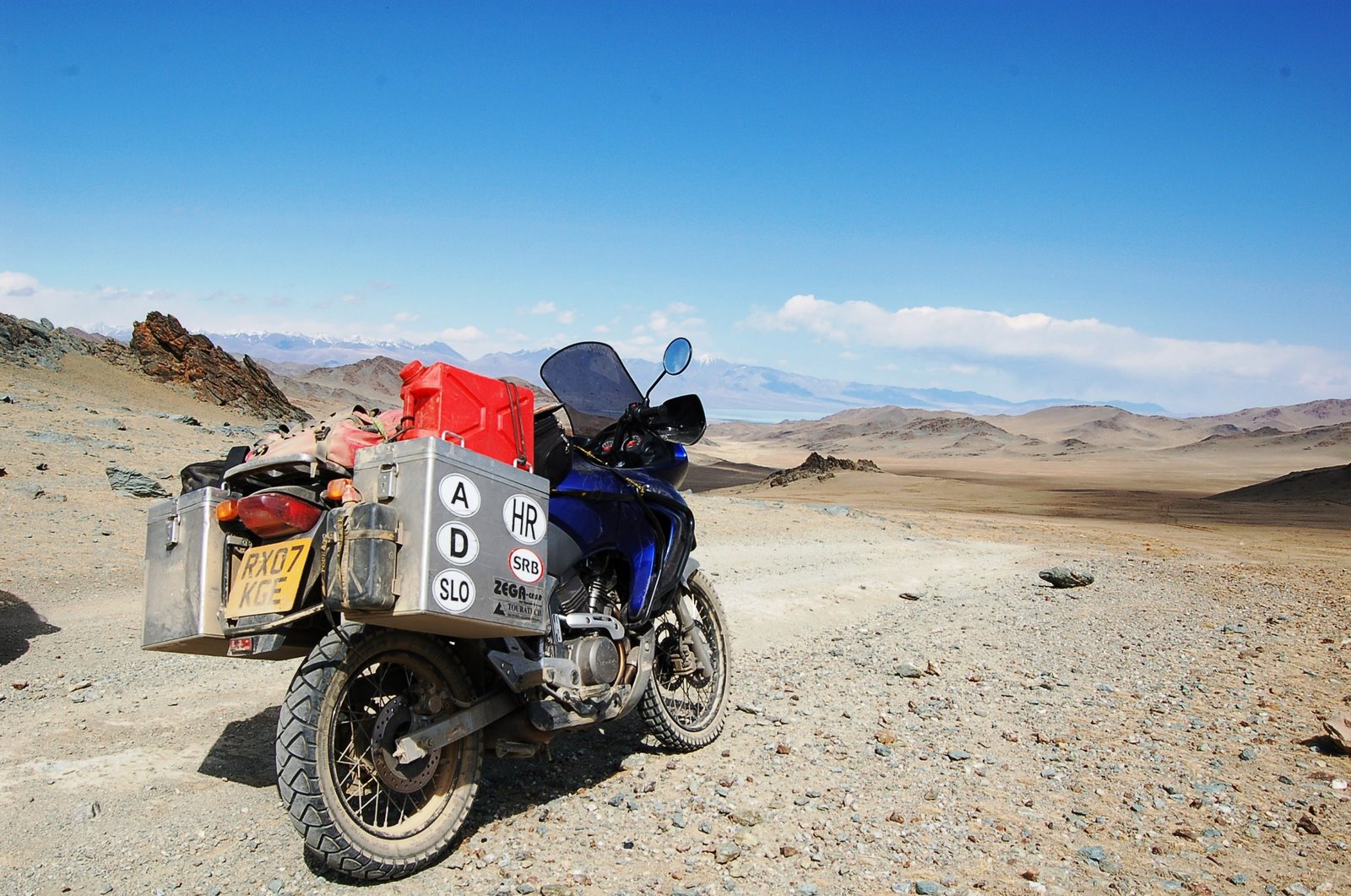
This is the travelblog of Cyril Ducau and Niccolo Manno on their adventure from London (Cyril), Munich (Niccolo) to Hong Kong on motorbikes.
It took us short of 3 months to do 20,000km on bikes, trains and planes. We crossed the following countries together:

Austria - Italy - Slovenia - Croatia - Serbia - Bulgaria - Turkey - Georgia - Azerbaijan - Turkmenistan - Uzbekistan - Kyrgyzstan - Kazakhstan - Russia - Mongolia - China - Hong Kong

On this site you will find some info on both of us, our bikes, some of our friendly helpers in Hong Kong and London and loads of pictures on our trip. 

Latest top picture

Latest top picture
Thanks for watching our blog - Enjoy as we did it!

Our path

Our path
Click picture to download Google Earth kmz file !

Thursday, March 26, 2026

Printed Cotton Fabric: Dye Sublimation vs Screen Printing Manufacturing Realities

NEW YORK, March 26, 2026 

Today the textile industry confirms that dye sublimation cannot successfully print on 100 percent cotton fabric. This limitation forces apparel producers to rely on screen printing for natural cellulose fibers. This press release covers the material science separating these two apparel decoration methods. Unlike sublimation, screen printing does not require a chemical phase change.

Why Does Dye Sublimation Fail on 100 Percent Cotton Fabric?

Dye sublimation fails on cotton because natural cellulose fibers lack the synthetic polymers required to encapsulate disperse dyes. Solid disperse dyes convert directly into a gas phase under a commercial heat press operating at 400 degrees Fahrenheit. This gas transition requires synthetic polymers, like polyester, to trap the dye molecules as they cool. Cotton lacks these polymers. The dye gas escapes completely. According to clinical textile adhesion tests, disperse dyes register zero peel strength on untreated cotton. The mechanical structure of natural fibers rejects this chemical bonding process entirely.

How Does Screen Printing Mechanically Bond with Natural Fibers?

Screen printing forces liquid ink through a porous stencil directly onto the fabric. Plastisol and liquid inks grip the porous cotton fibers and cure permanently under heat. Commercial printers coat a mesh screen with emulsion, expose it to ultraviolet light, and push ink through the unexposed pores using a squeegee. Plastisol requires a sustained curing temperature of 320 degrees Fahrenheit to bond the polymers. Natural cellulose readily accepts these liquid pigments. Manufacturers apply plastisol to dense materials because the ink sits entirely on top of the thick weave, creating a durable graphic layer.

What Are the Production Economics for These Textile Methods?

Screen printing carries high initial setup costs but becomes highly inexpensive at scale. Sublimation maintains a flat cost per unit regardless of volume. Every new color in a screen print requires a separate film positive and screen coating. This labor makes printing a single shirt very expensive. Large runs of spun cotton rely entirely on screen printing to drop the price. Apparel brands must choose the correct process for their substrate.

source: https://www.linkedin.com/posts/canvasetc_printingsolutions-smallbusiness-printondemand-activity-7442961972872183810-4s8v/

--
You received this message because you are subscribed to the Google Groups "Broadcaster" group.
To unsubscribe from this group and stop receiving emails from it, send an email to broadcaster-news+unsubscribe@googlegroups.com.
To view this discussion visit https://groups.google.com/d/msgid/broadcaster-news/998af16a-5c05-4679-a4f8-ea2c4c2876abn%40googlegroups.com.

No comments:

A BIG THANK YOU TO:

Cyril:
- Maddy, the head of our "London HQ", special technical and weather advisor, and because she is simply the best and has been so supportive over the last few months
- My family and friends for their understanding and moral support
- Robert Roe (alias Bob) from Motoselect Franham for preparing the bike with such good care
- Anastasia from thevisacompany for helping me deal with so much red tape
- Claudio von Planta for sharing his valuable experience on Long-way Round and Long-way Down and answering so many of our questions
- Ronnie, Emmanuel and Benjamin for their enthusiast support and precious advise
- The Techtransalp team for their excellent website and advertising our adventure

Niccolo:
- clearly Manon as she has always been supportive of this trip even though this means 3 months without me
- My mother for not giving up on me, for receiving all the parcels at home in Austria and for not freaking out!
- Amy and Steve for pushing over several months to keep focus on the organisation
- Xavier, for trusting me to be in France in June and be his best man at his wedding
- Cyril, for posting our tracks on the blog
- Louis, for looking into getting Continental to sponsor us
- Romain, for getting us the Turkmen visas
- My friends for all telling me "DO IT"!
- Claudio von Planta, Sambor and Maciej for sharing their great experiences on their numerous motorbike trips
- Henry, Yau and Tan from BMW HK for their support with the bike, the preparation and the bike sale
- Yasser, Mark, Michael and Christoph from BMW Munich for their help with all the accessories and the last minute bike purchase
- Bertrand and Alice for your help with the tyres in Almaty